
✤BRAZILIAN TREEHOPPER✤








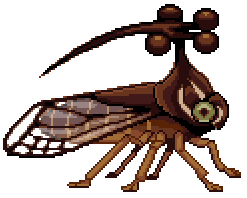
✤STATS✤
- Size: Really Tiny! (5mm)
- Range: South America
- Habitat: Rainforest Canopy and Understory
- Diet: I'm a sapsucker!
- Lifespan: ~3 Years
- Status: Not Evaluated
- Hidden Talent: Confectionery Poop Production
✤FUN FACTS✤
PERFECT PARENTS
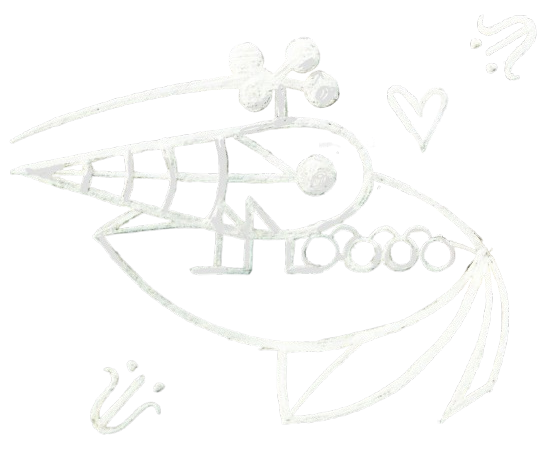
I take raising my precious little nymphs very seriously! The rainforest is cutthroat and unkind to young treehoppers, so to give my babies the best chance I sit on my eggs. That often isn't enough to keep the predators at bay, so I'll also bore holes into plant stems and lay my eggs deep within the crevice.
Source: SmithsonianANT BODY GUARDS
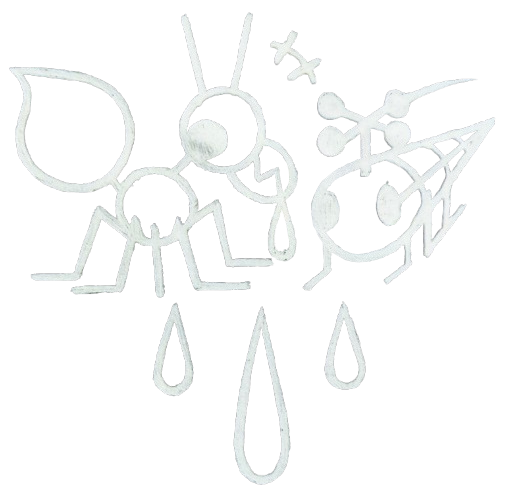
I am a sap sucker, meaning that I suck sap (who would've thought?). This plant sap is high in sugars, which while delicious is too much for my little body to process entirely. Therefore, while I suck the sap to obtain vital nutrients such as amino acids, I simultaneously excrete all the uneccesary sugar in a substance called "honeydew." Though this sugar is useless to me, my ant neighbors can't get enough of my delicious dung! They're even nice enough to protect me from bigger bugs that have a taste for treehopper. I just love those ladies!
Source: DrMetcalfFUNGUS AMONG US
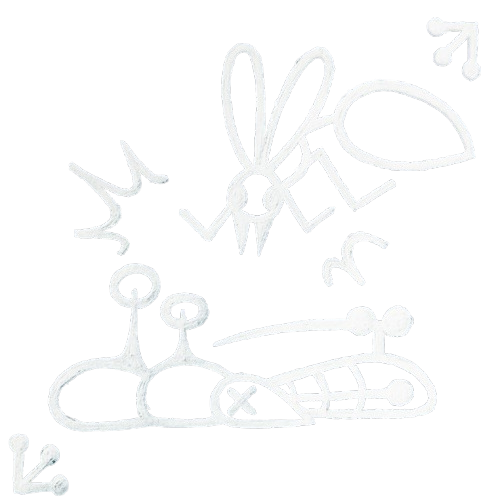
So let's address the elephant in the room; the anomaly on top of my head. Though it makes me look like I'm about to take off helicopter-style, the true purpose of my quirky crown is, for the most part, unknown. A notable theory from you humans involves its resemblence to a particular parasitic fungus. This fungus is known as Ophiocordyceps unilateralis, or zombie-ant fungus, and it's just about as horrifying as it sounds. Therefore, you couldn't exactly blame any predatory bug from staying clear of anything that looks like this organism, including your's truly.
Source: BBC✤BIOMOLECULAR INFO✤
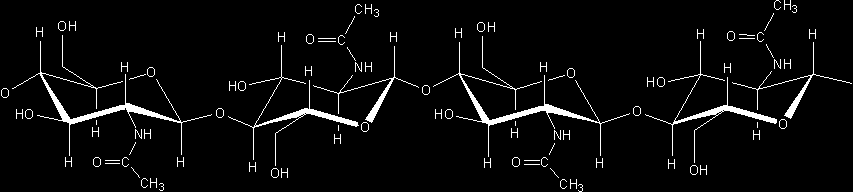
CHITIN
Chitin is a long polysaccaride (sugar chain) that is found within the exoskeletons of many arthropods, including treehoppers. The molecule itself is made up of modified glucose units called N-acetylglucosamine units, and can span up to several thousand units. Chitin chains can associate together to create nanofibers which can associate further to create stacked sheets. These massive molecular complexes give exoskeletons their strength and rigidity.
TREHALOSE

Trehalose is a disaccharide (two bonded sugars) comprised of two glucose molecules. Treehalose is found in insects as their blood-sugar, and in the case of treehoppers is also found in honeydew excretions. This disaccharide is less than half as sweet as sucrose (table sugar) and is often used as a preservative in food and vaccines.
Source: Nature✤CULTURAL SIGNIFICANCE✤
There is little in the way of treehopper-inspired legends or folklore. In terms of conservation, the Brazilian treehopper is often viewed as a symbol of morphological diversity and the often absurd ways in which evolution shapes organisms. In terms of pop culture, the Brazilian treehopper bears a striking resemblance to the creature Mahoraga from the anime Jujutsu Kaisen.
✤ETYMOLOGY✤
Its genus name, Bocydium, it derived from the greek word βοῦς (boûs) meaning ox. Additionaly, its species name, globulare, is derived from the word globular. This is in reference to its globe shaped appendages on its back.
Source: World Auchenorrhyncha Database✤EXTRAS✤
FUN LITTLE JINGLE BY BEETLEMANIA:
